


Modern Lighting Solutions for Stylish & Energy Efficient Spaces
Good lighting can make a room feel larger, warmer, calmer, and more expensive, often without changing the furniture. It can also cut wasted electricity when the right fittings, controls, and bulbs work together.
Modern lighting is no longer just about choosing a nice pendant. The best spaces use layers of light, efficient technology, and fittings that suit the way each room is used.
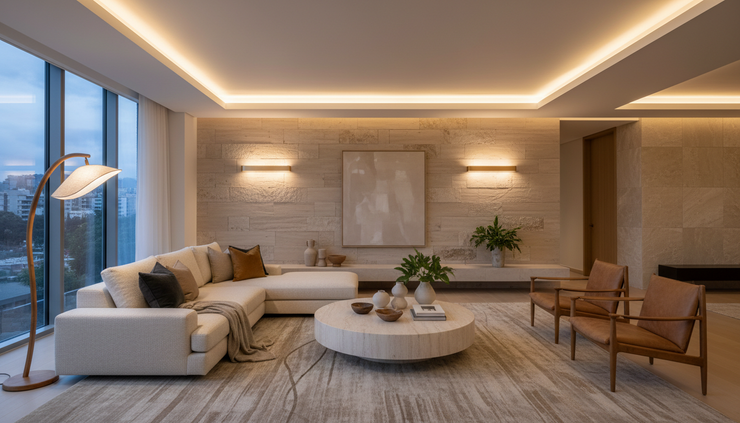
Start with layered lighting
A stylish lighting scheme usually has three layers:
Ambient lighting
The main light in the room, often from ceiling fittings, recessed lights, or wall lights.
Task lighting
Focused light for reading, cooking, shaving, applying make-up, or working at a table.
Accent lighting
Light used to highlight shelves, artwork, textured walls, plants, or architectural details.
Using all three creates flexibility. A kitchen might need bright downlights for food prep, pendant lights over an island, and under-cabinet strips for evening use. A living room may work better with lamps, wall lights, and a dimmable ceiling light rather than one harsh central bulb.
The goal is simple: every room should have a bright setting for practical tasks and a softer setting for relaxing.
Choose LED lighting for lower energy use
LED lighting is now the standard choice for most homes and commercial spaces. LEDs use far less electricity than traditional incandescent bulbs and usually last much longer. They also come in many forms, from classic bulb shapes to slim strips, spotlights, panels, and decorative fittings.
When choosing LEDs, look beyond wattage. Focus on:
Lumens for brightness
Kelvin for colour temperature
Dimmability if the room needs mood control
Beam angle for spotlights and downlights
CRI rating if accurate colour matters, such as in kitchens or dressing areas
Warm white, around 2700K to 3000K, suits bedrooms, lounges, and dining rooms. Neutral white, around 3500K to 4000K, works well in kitchens, bathrooms, utility rooms, and work areas.

Use smart controls where they make sense
Smart lighting can help reduce waste, but it should solve real problems. The most useful features are often the simplest.
Motion sensors work well in hallways, cupboards, utility areas, and downstairs toilets. Timers are useful for outdoor lighting. Dimmers help reduce brightness when full output is not needed. App and voice control can be helpful in open-plan rooms with several lighting zones.
For larger homes, scenes can make lighting easier to manage. One setting might brighten a kitchen for cooking, while another lowers the pendants and cabinet lights for dinner. This is where modern lighting solutions can combine comfort, style, and energy efficiency in a way that feels natural day to day.
Match fittings to the room’s style
Lighting should look good when it is off as well as on. The right fitting can act as a design feature, while the wrong one can make even a well-furnished room feel unfinished.
For a clean, modern look, consider:
Slimline ceiling lights
Recessed downlights with neat trims
Linear pendants over dining tables or islands
Wall washers for textured surfaces
Minimal track lighting for flexible layouts
LED strips hidden in shelves, coving, or stair details
Materials matter too. Brushed brass adds warmth, matt black gives contrast, chrome feels crisp, and opal glass softens glare. In small rooms, simple fittings often work best. In larger rooms, a bolder pendant can create a strong focal point.

Pay attention to glare and shadows
A room can have plenty of light and still feel uncomfortable if the glare is too strong. Bare bulbs, badly placed spotlights, and cold colour temperatures can make a space feel harsh.
To avoid this, use diffusers, lampshades, indirect lighting, and wall lights where possible. In kitchens, place task lighting in front of the person working, not behind them. In bathrooms, use lighting on either side of the mirror rather than relying only on a ceiling light, as this reduces shadows on the face.
Bedrooms benefit from softer sources. Bedside wall lights or lamps should be easy to reach and bright enough for reading without lighting the whole room.
Think about outdoor lighting too
Outdoor lighting improves safety, helps with wayfinding, and adds atmosphere to gardens, patios, and entrances. The key is restraint. Too much exterior lighting can feel stark and may disturb neighbours or wildlife.
Good outdoor options include low-level path lights, warm wall lights by doors, subtle uplights for trees, and motion-activated security lighting. Choose fittings with the right IP rating for their location, especially where they face rain or direct exposure.
Solar lights can work well for decorative garden use, though mains-powered fittings usually perform better for entrances, steps, and security.

Make every fitting earn its place
The best lighting schemes feel effortless because every fitting has a job. Before buying anything, ask what the light needs to do. Does it brighten a work surface, set a mood, guide movement, or highlight a feature?
A stylish and energy efficient space does not need more lights. It needs better placed lights, efficient LEDs, sensible controls, and fittings that suit the room. Start with one area, such as a kitchen, hallway, or living room, and build from there. Small lighting changes can make a space feel more comfortable, more polished, and easier to live in every day.


Comments