


Choosing the Right Ironmongery
Ironmongery is easy to leave until the end of a project, but it affects how a space looks, works and lasts. The wrong hinge can make a heavy door sag. The wrong handle can feel awkward every day. The wrong finish can mark quickly in a busy hallway or coastal home.
Good ironmongery does more than complete a door or cabinet. It supports safety, access, security and the overall style of the room.

Start with how the item will be used
Before choosing a finish or style, think about the job the ironmongery needs to do. A door in a family kitchen has different demands from a guest bedroom, a shop entrance or an external gate.
Ask a few simple questions:
How often will it be used?
Is the door internal or external?
Does it need to lock?
Is fire safety or accessibility a factor?
Will it be exposed to rain, salt air or heavy wear?
For example, a lightweight internal door may only need standard butt hinges and a simple latch. A solid oak front door needs stronger hinges, a secure lock, weather-resistant hardware and a finish that can cope with regular handling.
Function should always come before appearance. Once the practical requirements are clear, style choices become much easier.
Match hinges, locks and latches to the door
The best-looking handle will not save a poorly fitted door. Hinges, locks and latches form the working core of the installation, so they need proper attention.
For internal doors, common choices include:
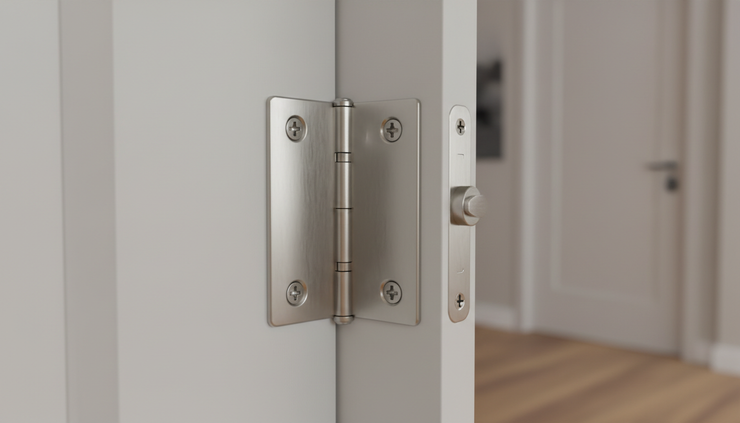
Butt hinges for standard timber doors
Ball bearing hinges for heavier or frequently used doors
Tubular latches for simple handle operation
Bathroom locks where privacy is needed
For external doors, choose hardware designed for security and exposure. This may include a suitable mortice lock, cylinder lock, night latch, security escutcheon and weather-resistant hinges.
Fire doors need certified ironmongery that suits the door set. That includes hinges, closers, locks, latches and seals where required. Do not swap these casually for decorative alternatives, as the full door assembly must perform as intended.
Choose a finish that suits the space
Finish has a big effect on the final look. It also affects maintenance. Polished brass, satin brass, antique brass, matt black, chrome, bronze and stainless steel all create a different mood.
A period property may suit antique brass, bronze or aged finishes. A modern flat may look better with satin chrome, stainless steel or matt black. For a softer style, satin brass often works well because it gives warmth without looking too shiny.
Think about nearby details too. Door handles do not need to match every fitting exactly, but they should sit comfortably with:
Light switches
Taps
Cabinet pulls
Window furniture
Stair rods or handrail brackets
External ironmongery needs extra care. Stainless steel, brass and suitable coated finishes usually cope better outdoors than cheaper plated options. In coastal areas, salt in the air can mark some finishes faster, so durability matters more than trend.
Keep style consistent across the project
A project can start to feel disjointed if each room uses a different handle shape, metal finish or hinge style. Consistency helps the whole building feel considered.
That does not mean every piece must be identical. A good approach is to keep one clear theme. For example, use the same finish throughout, then vary the handle type where needed. Lever handles can suit most rooms, bathroom turns can match them, and external door furniture can follow the same finish in a heavier form.
Cabinet ironmongery should also feel connected. Kitchen knobs, wardrobe handles and utility room pulls can echo the door hardware without copying it exactly.

Check measurements before ordering
Many ironmongery problems come from small measurement mistakes. Before buying, check the door thickness, lock case size, backset, hinge size and any existing cut-outs.
For replacement work, measure what is already fitted. If a new latch does not match the old backset, the handle may sit in the wrong place or leave visible marks. If a hinge is too small, the door may not be properly supported. If a knob is fitted too close to the frame, it may be uncomfortable to turn.
For new doors, decide early. Joiners and builders need the right information before cutting, drilling or hanging.
Do not overlook regulations and accessibility
Some projects need specific ironmongery for safety and compliance. This is common in shared buildings, commercial spaces, rental properties and fire-rated areas.
Door closers, panic hardware, thumb turns, fire-rated hinges and accessible lever handles all have practical roles. Lever handles are often easier to use than knobs, especially for children, older people and anyone with reduced hand strength.
If the project involves fire doors, public access or building control, get advice before ordering. It is much easier to specify correctly at the start than to replace unsuitable fittings later.
Spend where it matters most
Ironmongery is touched every day, so quality is noticeable. A good handle feels solid. A good latch closes cleanly. A good hinge stays aligned.
If the budget is tight, spend more on high-use items:
Front door locks and handles
Kitchen and hallway door furniture
Bathroom locks and turns
Hinges on heavy doors
External gates and garden doors
Lower-use cupboards or spare rooms can be simpler, but they should still be fit for purpose.

Final thoughts
Choosing the right ironmongery is about balancing looks, strength, safety and daily use. Start with the door or cabinet, then choose the hardware that suits its weight, purpose and setting. After that, refine the finish and style.
A well-chosen handle, hinge or lock should feel natural every time it is used. That is the difference between ironmongery that simply fills a gap and ironmongery that completes the project properly.


Comments